News
What "Trust the Site" means at La Vierge
Explaining La Vierge’s “trust the site” philosophy, shaped by custodianship of the land, dryland farming, and a long-term commitment to working within the natural limits of the Hemel-en-Aarde Ridge.
At La Vierge, “trust the site” is a belief shaped through years of working the land, guiding decisions on the farm for more than two decades.
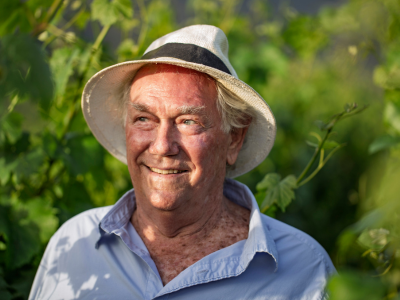
In the early 2000s, Peter Clarke founded La Vierge farm by starting with the site itself. On the cool-climate Hemel-en-Aarde Ridge, he planted dryland vineyards on virgin soils and committed to farming without irrigation, allowing the vineyards to respond to the land and the seasons.
Over the years, this approach came to define what “trusting the site” means in practice. It’s a commitment to what the land can offer, requiring patience, consistency, and the discipline to work within natural limits rather than attempting to override them.
For Peter and his family, trusting the site has always carried a sense of responsibility. The land is treated with care and restraint, with decisions made for the long term rather than short-term gain.
Site before style
At La Vierge, style emerges. It’s not decided in advance.
Work on the farm begins with site characteristics such as soil composition, elevation, exposure, and climate. These elements determine how vines grow and how fruit develops well before any decisions are made in the cellar. Working against them would mean overriding the very conditions that define the vineyards.
Placing site before style also means accepting seasonal variation. Each vintage reflects the conditions of that year, rather than following a predetermined outcome. Ripening pace, fruit character, and natural balance are established in the vineyards, before our wines are made. This approach favours honesty and consistency over uniformity.
What the Hemel-en-Aarde Ridge gives us
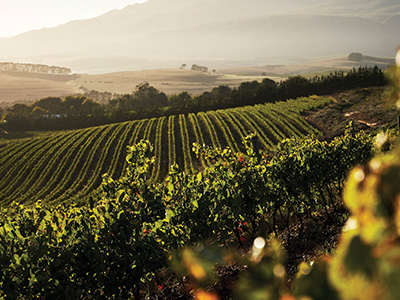
Our vineyards lie within a natural amphitheatre on the Ridge, with varied aspects and elevations across the farm. This creates distinct conditions from block to block, with each developing differently as the seasons unfold.
The soils are dominated by clay-rich Bokkeveld shale. The clay holds moisture through dry periods, while the underlying shale encourages vines to root deeply as they mature. These characteristics influence how our vineyards grow and how they cope with seasonal variation, rather than dictating specific outcomes.
Cooling coastal breezes pass through the amphitheatre, moderating temperatures and slowing the pace of ripening. Together, these conditions define the framework within which the vineyards are farmed, rather than a set of results to be engineered.
How trusting the site shapes farming decisions
Farming at La Vierge is guided by long-term vineyard health rather than short-term yield targets.
Dryland farming is the clearest expression of “trust the site”. Our vineyards rely on natural rainfall and seasonal conditions instead of corrective intervention. This means accepting what each season provides, and allowing rainfall, soil structure, and root depth to determine how vines grow.
As the vines mature, they respond by establishing deeper root systems and developing greater resilience. Dryland farming also places natural limits on vigour and yield. Those limits are accepted as part of the site, rather than treated as constraints to be engineered away.
Block orientation, slope, and exposure are treated as defining attributes, not variables to be corrected. Each vineyard block is managed individually, recognising that small differences in site lead to meaningful differences in how fruit develops.
Trusting the site also means accepting boundaries. Yields are governed by what the vineyard can sustain, not by external demand.
How this thinking carries through to the wines
In the cellar, the same discipline applies. Winemaking is guided by restraint, with the aim of preserving what the vineyards have already provided.
Gentle handling and careful attention to balance and texture allow the character of the fruit to remain clear. Technique supports expression rather than directing it.
Season after season, this consistency of approach has produced wines that reflect clarity, structure, and a strong sense of place. They reflect the soils, the climate, and the accumulated understanding of the farm itself, rather than a fixed idea of style.
For the Clarke family, “trust the site” remains both a conviction and a responsibility. It connects land, farming, and wine, and continues to guide how La Vierge works, year after year.
Guests can experience this approach through tastings and pairings in the La Vierge Tasting Room and Restaurant in the Hemel-en-Aarde Valley.